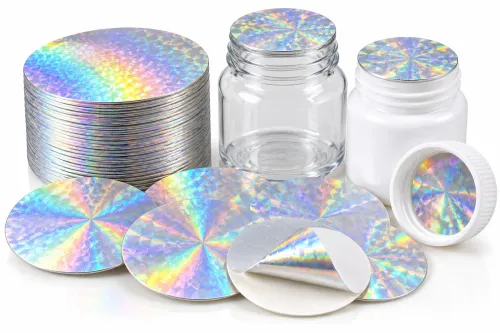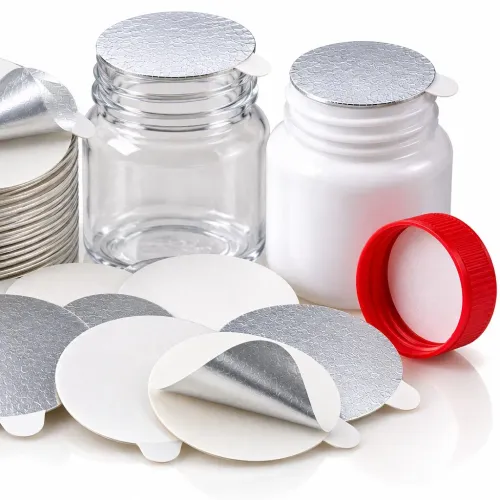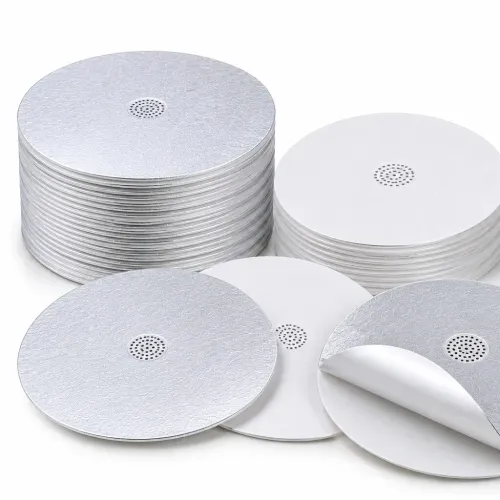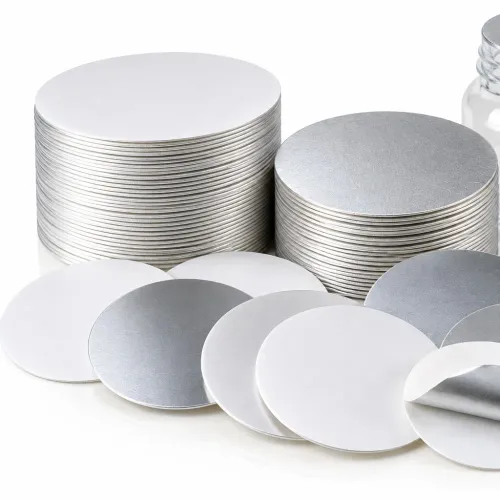
Reliable sealing depends on more than choosing an HDPE bottle or placing a liner inside a cap. You will learn how HDPE contributes to a sealing system, which liner layers and container dimensions matter, and how to validate the finished pack without confusing a visual bond with a dependable seal.
Key takeaways
- Use HDPE wads when stiffness supports accurate feeding and cap insertion.
- Treat the wad, heat-seal layer, foil, and backing as one structure.
- Confirm liner fit against the bottle finish before production trials.
- Adjust sealing time and temperature before increasing induction power.
What HDPE contributes to a bottle-sealing system
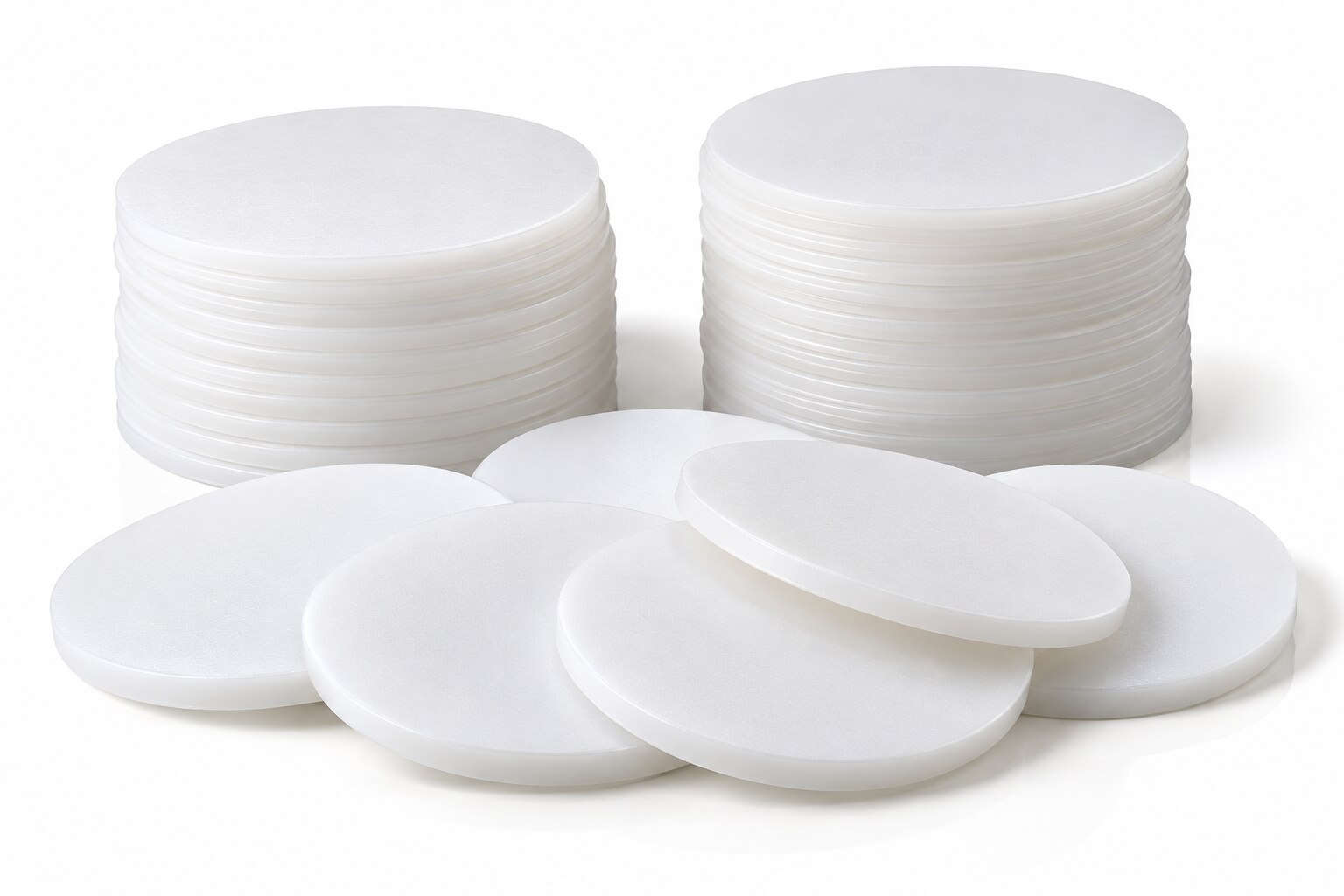
An HDPE wad earns its place when the package needs a liner that holds its shape during die cutting, feeding, and cap insertion. Its stiffness and dimensional stability reduce stretching, liner buckling, and off-centre placement compared with softer polyolefin films.
An HDPE bottle benefits from the same material family, but that does not guarantee a compatible seal.
HDPE offers useful moisture resistance and chemical resistance against many aqueous formulations. Its stiffness supports clean handling, and its opacity can help limit light exposure when the selected grade is opaque. It is not a high oxygen-barrier material: oxygen-sensitive products need an induction structure containing aluminum foil or a dedicated barrier polymer such as EVOH.
Account for these limits before approving the liner:
- An HDPE liner does not automatically seal to an HDPE bottle. The sealant layer must match the bottle’s neck finish, and it must contact that finish continuously.
- Excessive stiffness reduces conformity to a tilted, damaged, rough, or poorly finished mouth, creating leak paths.
- Surfactants, hydrocarbons, oxidizing ingredients, essential oils, and heat can cause permeation, swelling, or stress cracking. Test the actual product in the actual package under planned storage conditions.
- Food-contact suitability depends on the resin grade, colorants, additives, coatings, adhesives, foil treatments, and processing aids. In the United States, check the construction against 21 CFR 177.1520 and its extraction limits.
- HDPE does not generate induction heat. In a conventional liner, an aluminum foil susceptor heats first; the adjacent sealant layer melts and bonds to the container finish.
The wad is only one part of the induction-sealing structure
The seal is created by the melted sealant layer bonding to the container finish, not by the HDPE wad itself. In a conventional structure, an induction coil heats the aluminum foil susceptor; that heat melts the adjacent polymer. HDPE can provide the support, facing, or sealant layer, but it is not the induction target.
| Option | How it seals | When it fits |
|---|---|---|
| HDPE-based induction wad | Foil heats a compatible sealant against the finish | Leak-resistant, tamper-evident closure for compatible PE or PP packs |
| Pressure-sensitive liner | Adhesive bonds under cap pressure | Dry, clean products needing simple application without induction equipment |
| EPE or foam liner | Compression supplies cushioning and contact | Sealing against minor surface variation, without a hermetic foil seal |
| Foil or cap-integrated liner | Foil and sealant are built into the closure or liner | High-speed lines needing a fixed, integrated sealing format |
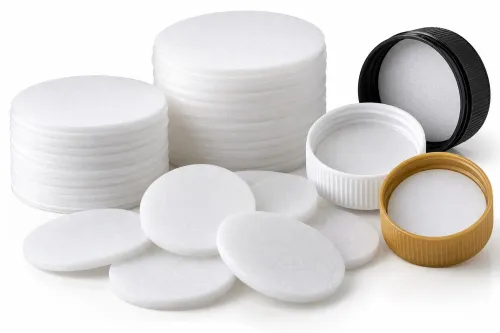
For induction sealing, place the wad under the cap, apply the specified cap torque, pass the closed container beneath the coil, and verify continuous bonding around the neck. An HDPE liner will not automatically seal an HDPE bottle: the sealant must match the bottle finish, and the liner must contact it without gaps.
Choose a dedicated peelable sealant when the opening must lift cleanly. Lowering induction energy on a permanent HDPE seal does not create a controlled peel; it creates a weak, uneven bond. HDPE also resists moisture well, but it is not an oxygen barrier equivalent to foil or EVOH.
Match the liner to the bottle before you run the line
Measure the neck finish and liner as a matched pair; a nominal cap size is not enough. Record the bottle’s inner neck diameter, outer neck diameter, sealing-land width and finish height, then compare them with the liner’s inside diameter, outside diameter and thickness.
The liner must sit flat inside the cap and cover the entire land without touching the thread or buckling against the closure.
- Inspect the finish for warping, short sections, chips and an uneven sealing land. Reject containers that prevent continuous liner contact.
- Confirm the sealant layer is compatible with the container material and finish. An HDPE-facing liner designed for PE or PP does not automatically bond to PET or glass.
- Place the wad under the cap, centred over the mouth. Check that it does not shift, curl or obstruct the thread.
- Apply the specified cap torque and record it with a calibrated torque tester. Insufficient torque loses compression; excessive torque can distort the liner or finish.
- Keep the sealing land clean and dry, then pass the closed container beneath the induction coil at the validated line speed, dwell time and power.
- Inspect opened samples for a continuous bond around the full circumference. Look for bare spots, wrinkles, foil exposure, sealant squeeze-out and cap cocking.
The cap and finish must hold compression while the molten sealant cools. If the liner fits but leaks, increasing power alone will not correct poor geometry, low cap torque or product contamination. Adjust the fit and closure mechanics before changing the induction setting.
Control the sealing window instead of increasing power
Set the lowest stable sealing window, not the highest possible induction power. Excess energy can rupture foil, squeeze out sealant, distort the liner or finish, and leave a weaker seal after cooling.
Begin with production bottles, caps, and the specified liner. Apply the target cap torque, then record the starting settings for induction power, dwell time, line speed, and coil-to-cap distance. Change one setting at a time; otherwise you cannot identify the cause of a failure.
Use this adjustment order:
- Confirm the liner sits flat and matches the neck finish; a short, warped, damaged, or contaminated sealing land will defeat a good process.
- Verify cap torque and cap seating; thread variation or cap cocking reduces compression while the sealant cools.
- Adjust line speed and dwell time together; slower movement increases energy exposure, while excessive dwell time can overheat the closure.
- Set coil-to-cap distance consistently across the line; variation changes the energy reaching each liner.
A leak with a clean, unbonded ring points to insufficient heat, distance variation, low compression, or contamination. Wrinkles and distortion point to excess energy or poor liner fit. Pack-to-pack variation points first to cap torque, finish geometry, liner placement, or inconsistent line speed.
Condition sealed samples for the specified period before testing. Use ASTM F88/F88M to compare seal-separation force, then perform a leak test; seal strength alone does not prove a hermetic package.
Choose HDPE wads by product, opening method, and validation evidence
Choose an HDPE-based induction wad when the bottle neck and product are compatible, the package needs a moisture-resistant seal, and the user will remove the cap rather than peel the liner. Do not select standard HDPE as a high-oxygen barrier or as a controlled easy-open layer.
| Option | What it means | When it applies |
|---|---|---|
| Standard HDPE seal | Moisture resistance and a firm bond | Aqueous products, chemicals, and permanent primary seals |
| Foil or EVOH barrier structure | Adds oxygen protection that HDPE alone cannot provide | Oxygen-sensitive products or long shelf-life claims |
| Engineered peelable structure | Uses a designed sealant or easy-open layer | Pull-tab or peelable opening; reducing induction energy is not a substitute |
| Vented structure | Manages pressure or vapour behaviour through a designed vent | Formulations that need controlled pressure release |
Require evidence from the actual bottle, cap, wad, and filled product, not resin data alone. Compatibility testing must cover surfactants, hydrocarbons, oxidisers, essential oils, storage temperature, and the stated shelf life; otherwise swelling, permeation, or stress cracking can appear after approval.
Ask for a production-line validation report containing:
- Seal integrity testing after the specified conditioning period, including seal-force results from ASTM F88/F88M.
- Nondestructive vacuum-decay results to ASTM F2338 and gross-leak pressure testing to ASTM F2096.
- Torque, induction settings, line speed, and acceptable seal appearance limits.
- Drop, transport, oxygen-barrier, and tamper-evidence results when those claims apply.
Surya Products Limited can help compare a vented, two-piece, or pull-tab construction against these acceptance tests rather than approving a wad by appearance alone.
Related products
 | Vented Wads Designed as per health safety standard, these vented wads are used as reliable sealing options for HDPE and PET bottles containing chemicals. View product → |
 | INDUCTION SEALING WADS Paperboard, polyethylene and wax made two piece induction wads are reliable options for effective sealing of bottles and containers. View product → |
Frequently asked questions
What does HDPE contribute to a bottle-sealing system?
HDPE provides stiffness and dimensional stability, helping the wad resist stretching, buckling, and off-centre placement during die cutting, feeding, and cap insertion.
Is the HDPE wad the complete induction-sealing structure?
No. The wad is one component. The complete structure can include a backing, foil layer, heat-seal coating, and other layers selected for the container and product.
How do you match an HDPE liner to a bottle?
Check the liner diameter, bottle finish, cap interior, product compatibility, opening method, and seal requirements before running line trials.
Why control the sealing window instead of increasing power?
Excess power can overheat or damage the liner. Control induction power alongside sealing time, temperature, line speed, pressure, and the approved operating window.
How should you choose HDPE wads for production?
Choose them by product chemistry, bottle and cap design, opening method, required seal performance, and validation evidence from representative line trials.
Related products
 | EPE LINERS / WAD Co-extruded 3 Layer EPE LIENRS Represents a single piece Expanded Polyethylene foam liner Material in punched Discs to specific dimensions or in Roll... View product → |
 | EPE Ring Liners EPE Ring Wad For Fridge Bottle Cap An EPE ring liner is a type of liner made from expanded polyethylene foam that is commonly used in fridge bottle caps to provide a seal between the... View product → |
 | Single Piece Induction Wads Keeping track with the latest market developments, we are engaged in offering an extensive range of Induction Sealing Wads. View product → |
 | Agrochemical Wads This is 5 Layer Agrochemical wads for HDPE BOTTLES View product → |