A holographic feature can help a buyer recognise an authorised pack, but it does not prove that the container has never been opened. You will learn how the liner is applied and opened, how to separate seal evidence from authentication, and which design, inspection and validation controls make the system harder to defeat.
Key takeaways
- Inspect whether the foil remains bonded to the container rim after opening.
- Treat the hologram as a visual security feature, not proof of product authenticity.
- Combine custom patterns, serialisation or covert marks to make copying harder.
- Test seal adhesion, cap torque, opening behaviour and hologram legibility before purchase.
How the induction seal creates visible evidence of opening
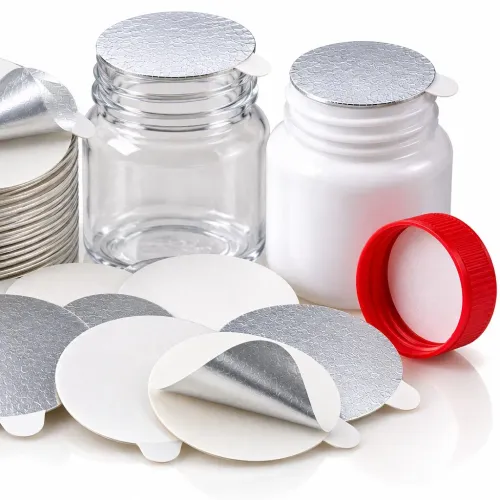
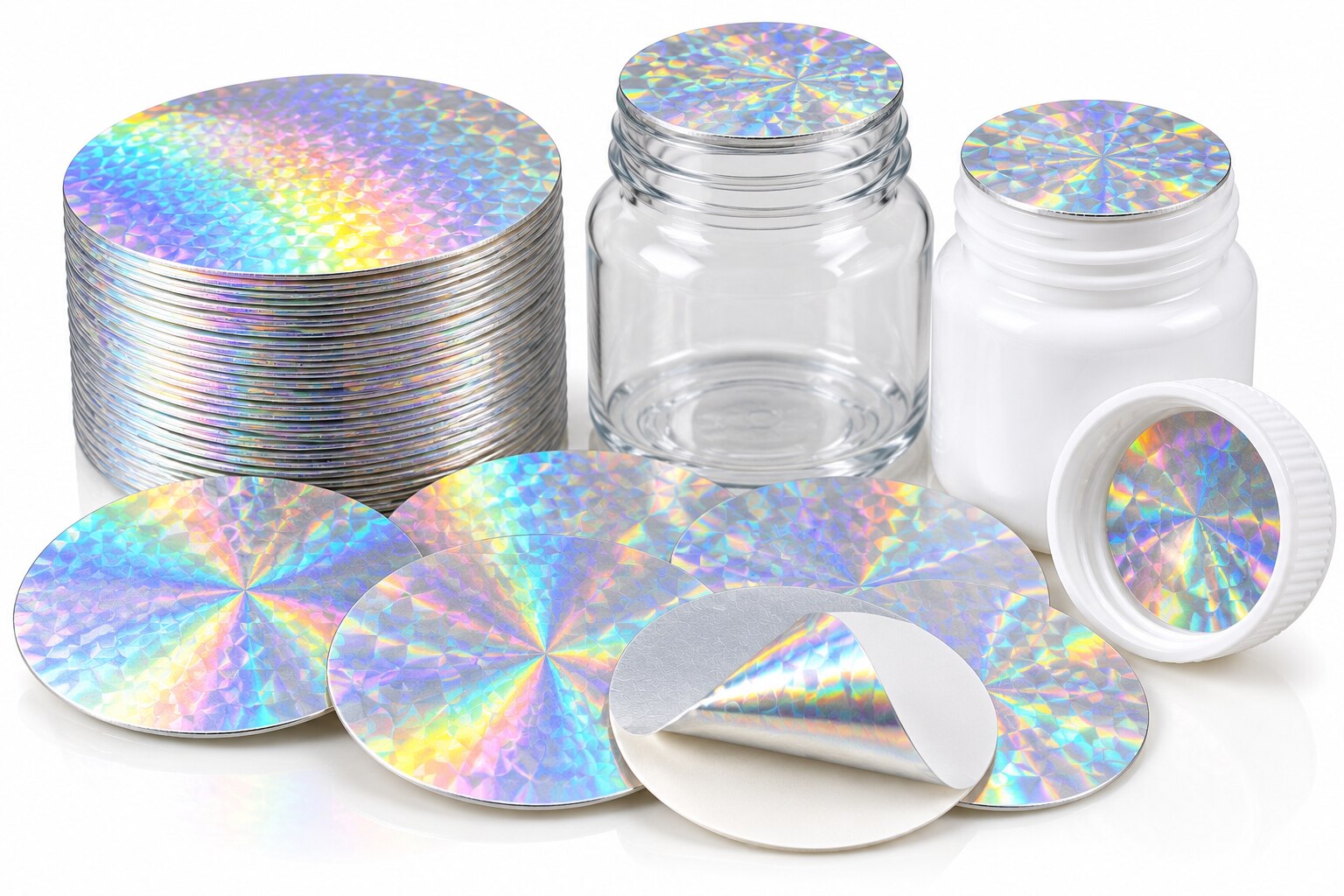
The visible warning begins with the induction sealing sequence: place the wad beneath the cap, apply the cap at the specified cap torque, then pass the closed container through an induction sealer. Electromagnetic energy heats the aluminum foil, which activates its heat-seal coating and forms a foil-to-finish bond with the container rim.
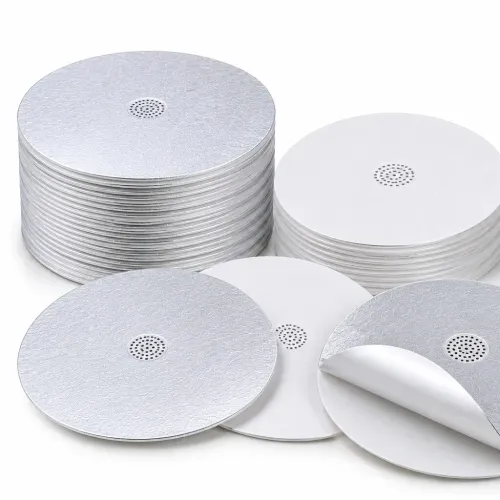
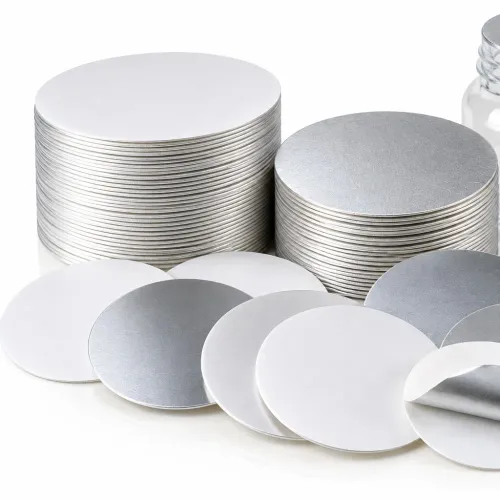
The liner’s construction determines what happens when the consumer opens the pack. A clean-peel design leaves the bonded seal on the container finish; a split or tear design separates part of the liner; another construction keeps a portion attached to the cap.
Opening then breaks the continuous seal, tears the liner, removes the foil, or leaves visible residue around the rim.
That change is the tamper-evident seal: the consumer sees a missing, damaged, lifted, or interrupted barrier before using the product. The holographic layer can remain on the removed cap, on the container-side liner, or across the separated parts, depending on the wad design.
Its movement or damage can make interference easier to notice, but the hologram itself is not proof that the pack stayed closed. A copied holographic image can remain intact on a refilled container, while a broken foil-to-finish bond provides the direct evidence of opening.
Seal strength must balance shipping resistance against difficult opening and excessive residue.
What the hologram authenticates—and what it cannot prove
A hologram and tamper-evident feature answer different questions: one supports brand authentication, while the other shows whether the pack has been opened.
| Type | What it tells you | What it cannot prove |
|---|---|---|
| Tamper-evident seal | The foil, liner, bond, residue or cap feature has changed, indicating entry after sealing. | That the product came from an authorised manufacturer, or that the contents were not replaced. |
| Holographic feature | The pack carries the expected optical design, such as controlled artwork, microtext or a changing image. | That the container was never opened, or that the hologram was not copied or moved from another pack. |
| Combined system | The seal’s opening behaviour and the hologram match the approved package design. | That every genuine-looking pack is genuine without controlled supply, data or verification. |
A simple rainbow pattern can be photographed, printed on a label, or transferred to counterfeit packaging. It provides brand protection only when its artwork, dimensions, tear behaviour, batch or serial data and application process are controlled together. A copied hologram then fails to match the approved seal or package geometry.
Treat the hologram as one authentication signal, not a guarantee. A genuine holographic wad does not prevent refilling, substitution of a genuine wad onto a counterfeit container, or reuse after opening.
Your verification procedure should state which feature changes with viewing angle, which microtext or kinetic effect must appear, and where to report a failed check.
How to design a holographic feature that is harder to copy
Make the hologram one part of a controlled identity, not the identity itself. Commission unique holographic artwork with a kinetic image, depth effect, or colour shift that changes at defined viewing angles. Add microtext and a fine-line pattern; a copied photograph will usually lose these details.
| Control layer | Stronger design choice | Weakness it addresses |
|---|---|---|
| Optical | Unique holographic artwork, kinetic elements, microtext, and fine-line geometry | Stops a basic rainbow pattern from serving as the only test |
| Variable data | Serial numbers linked to production records | Makes one copied image unsuitable for every pack |
| Digital | QR verification leading to a controlled, changing record | Lets inspectors check data, not just appearance |
| File control | Restricted master files, version numbers, approved converters, and destruction records for obsolete stock | Limits unauthorised reproduction before printing |
Use variable data that an attacker cannot predict from one sample. Print serial numbers in a readable format, then link each range to the product, batch, destination, and issue date. A QR verification page must check the code against that record; a QR code that opens only a fixed webpage adds little protection.
- Give inspectors a reference image showing the expected angle change, visible microtext, serial-number format, and QR response.
- Keep artwork masters, holographic origination files, and variable-data tables under named access permissions.
- Approve the converter and sealing process together, because heat, pressure, or dwell time that distorts the holographic layer can weaken the visual check.
Control the wad dimensions, tear behaviour, and container geometry as well. Otherwise, a genuine holographic wad can be transferred to a counterfeit container, leaving the optical feature authentic while the package is not.
How consumers, distributors and inspectors verify the seal
Do not accept a pack because the foil looks shiny. Under normal light, check that the seal is present, centred on the container finish, bonded around its full circumference, and free from lifting, tears, residue, wrinkles or evidence of reattachment.
A hologram can remain visually intact despite a channel leak or weak bond, so this inspection does not prove package integrity.
Use the verification procedure in this order:
- Under normal light, confirm the tamper-evident seal has not been cut, punctured, removed or replaced, and check the cap and closure for signs of opening.
- Tilt the pack slowly from side to side and up and down. The specified image movement, colour shift, kinetic element or microtext must appear at the stated angle; a static rainbow shine is not hologram verification.
- Compare the artwork, registration, wording, serial or variable data, and hologram position with the approved reference sample. Look for blurred detail, incorrect spacing, missing microtext or a design that differs from the reference.
- Check the covert security feature only as instructed for authorised personnel, using the stated reader, illumination or verification service. Do not accept a feature that merely looks plausible.
- Record the batch or serial number, isolate a failed pack, and escalate it through the documented counterfeit or tamper process.
A broken bond indicates possible opening; it does not identify a counterfeit. An intact hologram supports brand authentication, not a leak test or a guarantee that the contents are genuine.
What to specify and test before choosing a holographic wad
A holographic wad is production-ready only when its liner, container finish, closure and induction process work as one system. Start by specifying the container finish diameter, sealing-land width, neck material, cap type and cap liner dimensions; a wad that bridges the threads or misses the land will create weak spots or excessive peel force.
Record these inputs before requesting samples:
- Container material: glass, HDPE, PET or another resin, including additives or surface treatments.
- Closure details: cap material, thread profile, torque range and whether the liner must stay in the cap or on the container.
- Wad construction: backing, foil gauge, heat-seal coating, holographic layer and intended separation behaviour.
- Induction-sealing compatibility: matched coating and container surface, not simply an aluminium foil layer.
- Process window: generator power, line speed, coil height, cap torque and container temperature.
- Finish condition: no oil, powder, syrup, dust, condensation, chips or deformation on the sealing land.
| Check | What to test | Failure it reveals |
|---|---|---|
| Container and cap fit | Dry-fit the wad, cap and finish; inspect coverage | Wrinkling, thread interference or exposed land |
| Seal strength testing | Measure peel force across the specified production window | Partial bonding or an overly difficult opening |
| Leak integrity | Use a defined vacuum-decay, pressure-decay or dye-ingress method | Channels that a hologram cannot show |
| Process repeatability | Run samples at minimum, nominal and maximum settings | Unstable seals after speed or power changes |
Ask Surya Products Limited for a construction drawing and trial protocol that records these variables. Approve artwork only after the same tests pass on filled, contaminated-challenge and production-speed samples.
Related product
 | Holographic Induction Sealing Wads This is Two peice type induction sealing wads with HOLOGRAM or Holographic printing. View product → |
Frequently asked questions
How does a holographic induction wad show that a container was opened?
Induction heating bonds the foil to the container rim. When the cap is removed, the bonded foil can tear, separate or leave visible evidence that the seal was disturbed.
What does a hologram authenticate on packaging?
It authenticates the presence of a designed visual security feature when users can compare the pattern with a known genuine pack. It does not prove that the product inside is genuine, safe or untampered with before sealing.
How can you make a holographic seal harder to copy?
Use a custom holographic design with controlled artwork, variable data such as serial numbers, and covert or machine-readable features when your supply chain can verify them.
What should you test before choosing a holographic induction wad?
Test compatibility with the container finish, seal adhesion, cap torque, induction settings, opening behaviour, hologram visibility, storage conditions and performance after transport.