A thicker or denser EPE sheet is not automatically the safer packaging choice: the right grade depends on load, compression travel, closure geometry, handling forces and the protection function you need. By the end, you will be able to define the required measurements, compare supplier test data and request a sheet that works in your actual package rather than choosing from nominal specifications alone.
Key takeaways
- Choose thickness for compression distance, surface conformity and material use.
- Compare density alongside thickness; density alone does not predict cushioning.
- Confirm sheet width, length, core size, roll weight and winding direction.
- Test compression, recovery, abrasion and fit using the finished package.
What does EPE sheet thickness change inside a package?
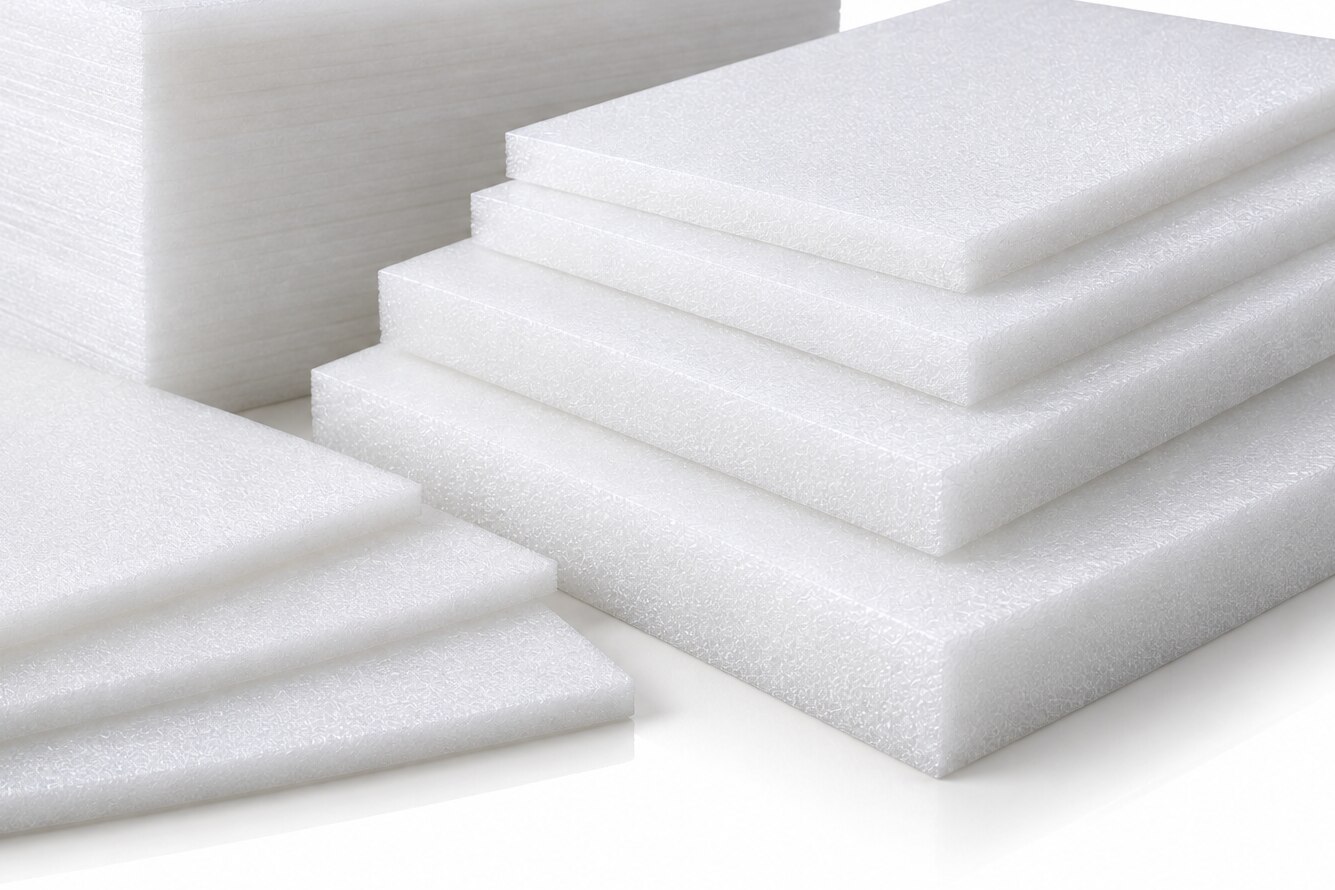
Thickness changes how far a sheet can compress, how closely it follows uneven surfaces, and how much material each package consumes.
Greater foam compression travel gives a thicker cushioning thickness more distance to absorb impact before bottoming out, but a heavy load can collapse the foam cells or create excessive compression set, leaving less protection than expected.
| Option | Practical effect | Suitable when |
|---|---|---|
| Thin EPE sheet | Light cushioning, spacing, low material use and easier roll handling | The product is light, surfaces are smooth and drop risk is low |
| Thicker EPE sheet | More impact travel and conformability around irregular surfaces | Drop risk, surface variation or cap-height differences require extra accommodation |
| Excessively thick sheet | Larger stack-up, uneven pressure and possible loss of recovery | Avoid inside closures unless the available gap and compression are validated |
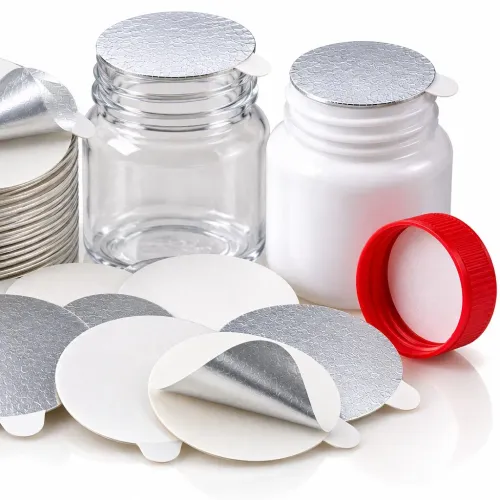
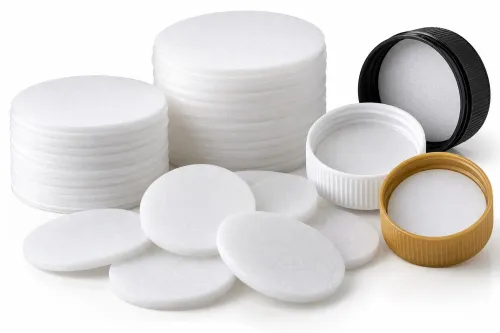
Inside a closure, extra material can raise the liner, alter cap seating and prevent uniform pressure across the container finish. EPE supports or cushions an induction liner; it does not create the hermetic bond. Confirm peel or burst strength, leak rate, seal continuity and removal behavior after changing thickness.
Specify nominal thickness with thickness tolerance and flatness. Variation changes sealing pressure and cut dimensions, while thicker stock increases material per piece, roll diameter and storage demand; it can also feed or die-cut less easily. A thin sheet suits spacing, but add thickness only when the gap, load and closure geometry justify it.
How should you interpret EPE density when comparing grades?
No: a higher-density EPE sheet is not automatically stronger, safer or better cushioned. EPE density affects stiffness, resilience, compression recovery, cutting behavior and resistance to collapse under cap or product pressure, but density alone does not predict cushioning.
A high-density grade can transmit more shock to a lightweight product because it deflects less. A low-density grade can lose thickness under sustained load, reducing support and sealing pressure during storage.
Request a compression-deflection curve or cushioning curve measured at the package’s actual conditions:
- Static load from the product, closure or stacked packages
- Impact load from the expected drop or handling event
- Operating temperatures during filling, transport and storage
- Retained thickness and compression recovery after the intended dwell time
Do not accept “250 to 400” as a complete density specification. Ask whether the value means density unit kg/m³, kg/m³ multiplied by a stated factor, or another basis. Obtain the test method, specimen condition, density tolerance and extrusion direction; machine-direction and cross-direction results can differ.
Density also does not replace separate tensile, tear, puncture and compression data. Sharp glass edges, closures and repeated handling require each property to be checked against the actual failure risk.
For die-cut parts, low-density EPE is more prone to cell collapse, edge tearing and dimensional recovery after punching. Higher-density EPE usually cuts more cleanly but demands greater cutting force and careful tool clearance, punch geometry and machine settings.
How do you choose thickness and density together for the package?
Choose thickness by the compression travel available in the package, then choose density by the load-bearing and recovery required. Start with container material and finish, closure type, cap torque, product mass, contact area, drop height, vibration exposure and surface irregularities.
- Define the function: cushioning, spacing, abrasion protection, gasketing or liner backing.
- Measure the available gap and calculate the compression range. The sheet must absorb the movement without bottoming out or losing recovery.
- Match thickness to that compression travel. Match density to the load and the recovery required after release.
- Compare supplier compression-deflection or cushioning curves at the lowest and highest temperatures during filling, induction sealing, warehousing and transport.
| Function | Thickness priority | Density priority |
|---|---|---|
| Cushioning | Enough travel before bottoming out | Validated response at static and impact loads |
| Spacing or abrasion protection | Enough clearance to prevent contact | Toughness and resistance to collapse |
| Gasketing or liner backing | Controlled stack-up and conformity | Recovery and stable load support |
Compression set under closure load becomes decisive when the cap remains tight for weeks or months. Request retained-thickness data at the intended compression, temperature and dwell time; initial thickness alone cannot predict sealing pressure.
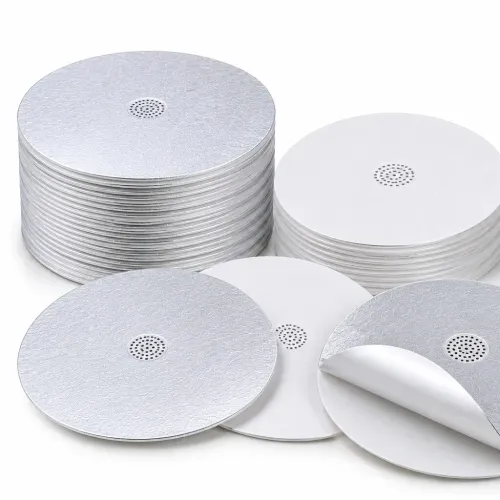
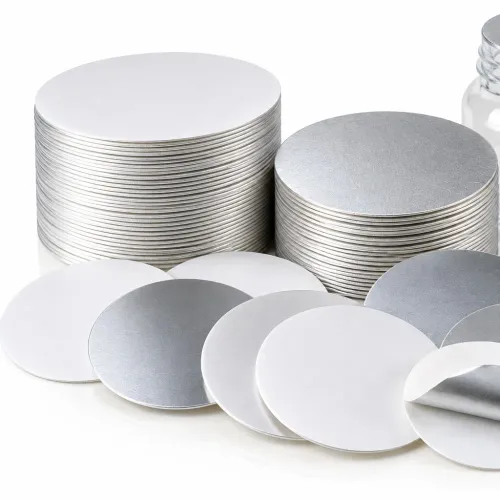
For induction-sealing wads, EPE normally supports or cushions the seal rather than creating the hermetic bond. The foil, sealant, container finish, liner seating, induction power and dwell control bonding. Change EPE thickness or density only after requalifying the seal window with peel or burst strength, leak rate, seal continuity and removal behavior.
Which dimensions and roll details must you confirm before ordering?
A wrong axial gap or cut size measurement can stop a liner from seating, wrinkle the seal or prevent the cap from closing. Measure the package before discussing EPE roll dimensions.
- Record the container opening or contact area, shoulder clearances and available axial gap.
- Specify the required cut diameter or outline, including notch, tab and hole locations.
- Measure the required sheet thickness after compression, not only the free thickness.
- State the roll width required by the slitter, unwinder or die-cutting process.
- Ask whether the stated 110 mm minimum width applies to every roll, a standard production format or one order configuration. Do not treat it as a universal roll limit without confirmation.
- Request width tolerance, splice policy and allowable telescoping.
- Specify thickness tolerance, density basis, flatness, extrusion direction and storage conditions.
Separate cut geometry from delivery format. Confirm the following before ordering:
| Detail | Confirm | Why it matters |
|---|---|---|
| Cut geometry | Diameter or outline, thickness after compression | Controls fit and seal pressure |
| Roll length and diameter | Roll length and finished roll diameter | Determines pallet space, rack height and unwinding clearance |
| Core | Core inner diameter and core material | Must match the unwinding equipment |
| Winding | Tightness and allowable telescoping | Prevents loose edges, tracking faults and feed stoppages |
| Conversion | Width tolerance and splice policy | Reduces die-cutting waste and unexpected joints |
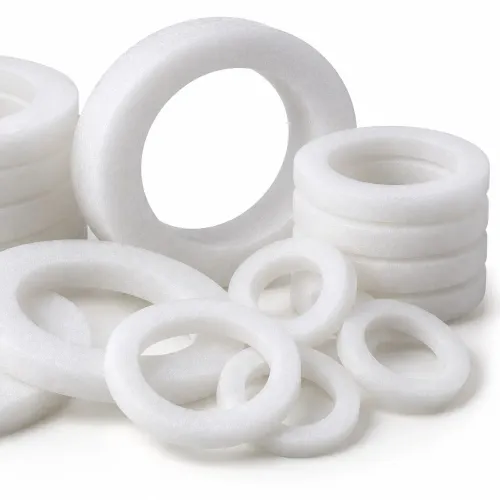
Surya Products Limited can use a written drawing and physical sample to show the actual roll and cut dimensions when you discuss EPE sheets or liner conversion. Confirm those dimensions against pallet capacity, die-cutting setup and material waste before approving the order.
Related product
 | EPE Sheets MOQ : 25000 Pieces Minimum Width: 110mm Unit of Measure : Kg Thickness : .8mm to 2.5mm Density : 250 to 400 Packaging : Roll View product → |
What tests confirm that the selected EPE sheet will work?
Qualification starts with samples in the proposed thickness and density, not a catalogue description. Run EPE qualification testing after the intended closure load and dwell time, measuring retained thickness and recovery in a compression-set test.
Repeat compression and recovery checks at the coldest and warmest temperatures reached during filling, induction sealing, transport and storage. Room-temperature data does not qualify hot-fill, cold-chain or elevated-warehouse use.
| Test | What to measure | Failure it exposes |
|---|---|---|
| Cushioning | Load-versus-deflection or cushioning curves at actual static and impact loads; representative drop and vibration testing | Bottoming out, excessive transmitted shock or damage during handling |
| Conversion | Punched edges for tearing and cell collapse; dimensional recovery in machine direction and cross direction | Poor cut quality, distortion or feeding problems |
| Sealing | Complete induction seal validation, including seal continuity, leak rate, peel or burst strength and removal behavior | Uneven bonding, leakage, weak seals or difficult opening |
A seal qualification must use the actual container, closure, liner construction, induction settings and dwell time. Visual bonding alone cannot prove a hermetic seal.
Treat every performance claim as a separate qualification item. Require a named formulation, test method, conditioning procedure and pass criterion for food-contact, pharmaceutical-contact, odor, extractables, chemical-resistance, antistatic, flame-retardant, conductive or UV-stability claims.
Low water uptake does not make EPE a vapor or oxygen barrier. Assign moisture and gas control to the specified film, foil or coating, then verify it with the applicable barrier tests.
Frequently asked questions
What does EPE sheet thickness change inside a package?
Thickness changes compression distance, conformity to uneven surfaces, cushioning space and the amount of material each package consumes.
How should you interpret EPE density when comparing grades?
Use density to compare material mass and firmness, but assess it with thickness because density alone does not determine package protection.
How do you choose thickness and density together for the package?
Match thickness to the available clearance and surface irregularities, then choose density based on the required firmness, load and handling conditions.
Which dimensions and roll details must you confirm before ordering?
Confirm sheet thickness, width, length, roll diameter, core size, winding direction, roll weight and dimensional tolerances.
What tests confirm that the selected EPE sheet will work?
Test the finished pack for compression, recovery, abrasion, fit, load handling and protection after the expected transport and storage conditions.