Choosing an EPE ring by cap diameter alone can produce wrinkles, blocked openings, weak contact, or leaks that appear only after transport and temperature changes. By the end, you will be able to match a ring to the closure geometry, specify the measurements a supplier needs, and decide when a full-face or induction construction is the safer choice.
Key takeaways
- Use an EPE ring when the cap compresses a continuous annular sealing land.
- Choose a full-face liner when the package needs broad surface coverage.
- Measure ring diameter, thickness, groove dimensions, and closure compression.
- Test filled packages for leaks, torque retention, seal integrity, and product compatibility.
How an EPE Ring Works Inside a Closure
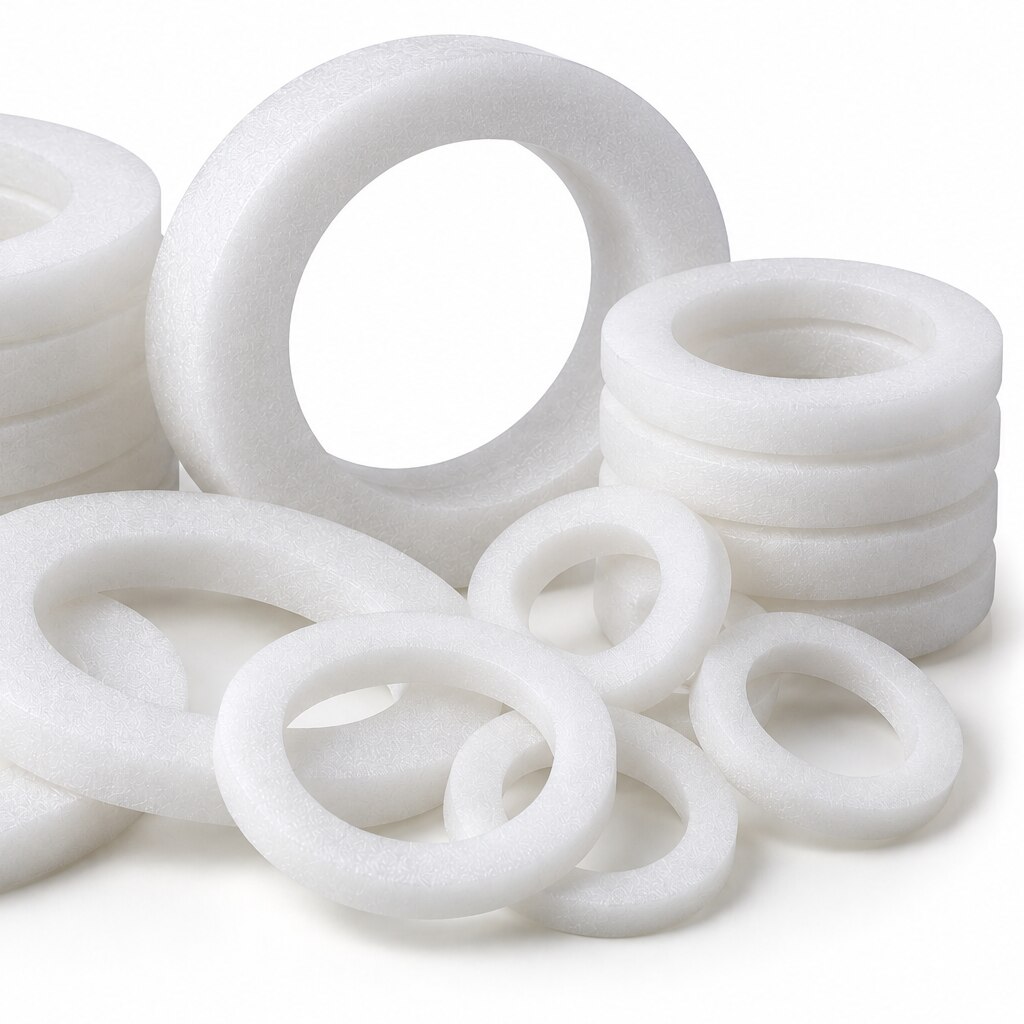
A cap compresses an EPE ring against the bottle’s continuous annular sealing land, turning the ring into an annular gasket. The ring sits in a groove, retaining step, or interference fit inside a screw, snap-on, or flip-top cap.
As the closure seats, cap compression creates contact pressure around the opening while leaving the central area largely uncovered.
Application torque controls that pressure, not simply tightness. Under-torque leaves gaps when finish height or alignment varies; over-torque can crush the foam, reduce recovery after thermal or mechanical cycling, distort the ring, or squeeze product into the cap.
Select the ring thickness, inside diameter, and outside diameter to load the intended land without folding, buckling, or extending beyond the cap.
- Keep the EPE ring seated during cap insertion; a tilted ring creates a partial seal.
- Treat the ring as a resealing gasket, not tamper evidence. Use an induction membrane, tear band, or breakable bridge to show opening.
| Construction | Contact pattern | Main difference |
|---|---|---|
| EPE ring | Annular contact around the opening | Leaves the centre open and tolerates limited fit variation |
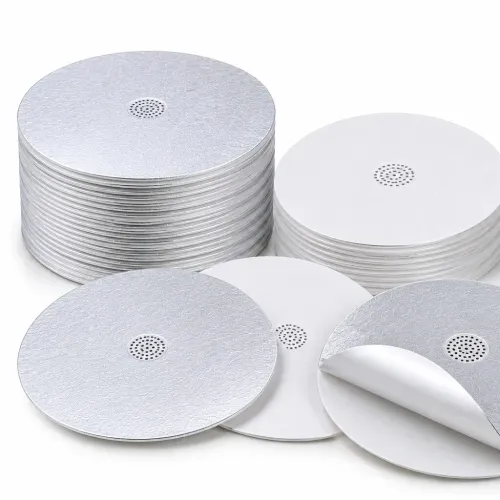
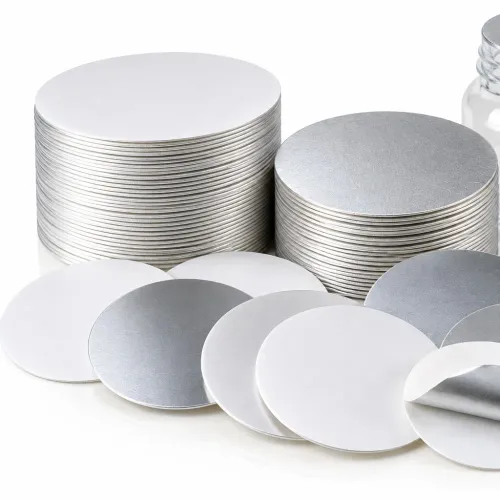
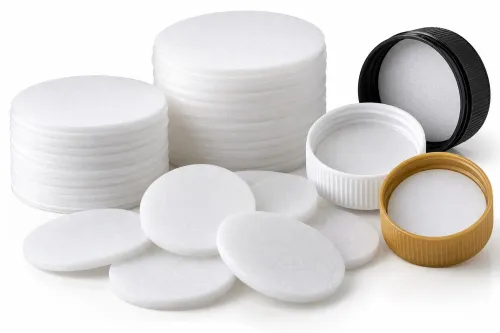
| Full-disc EPE wad | Full-face compression | Covers the entire closure underside |
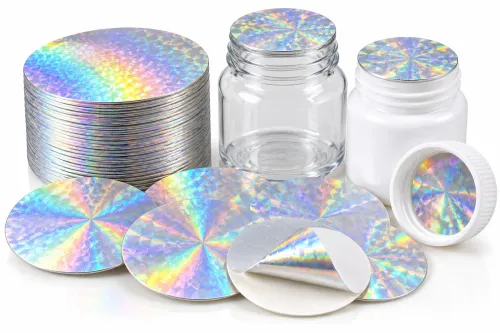
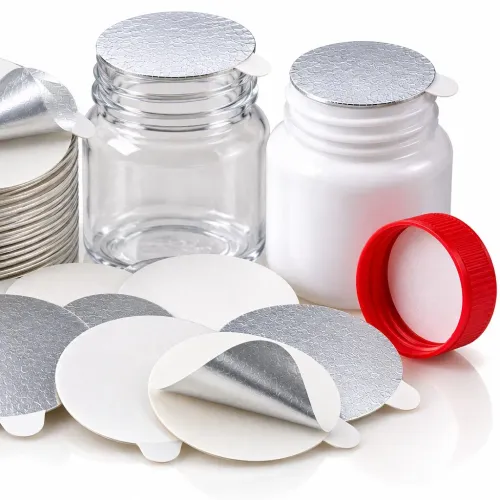
| Induction-seal liner | Heat-sealed foil membrane | Provides a bonded barrier and designed opening evidence |
| Pressure-sensitive liner | Adhesive bond to the container | Relies on adhesive contact rather than cap compression alone |
| Pulpboard liner | Compressed fibre disc | Uses a rigid, absorbent substrate rather than foam |
| Rubber or silicone gasket | Elastomeric annular contact | Uses a different material and recovery profile for demanding conditions |
When a Closure Needs a Ring Rather Than a Full-Face Liner
An EPE ring is the right geometry when the bottle finish presents a continuous annular sealing land and the cap has a matching groove or flat seat. The dispensing opening must remain clear inside that ring; otherwise the liner can obstruct flow or fail to seal around the actual outlet.
Check these points before selecting the ring:
- Measure the finish’s sealing-land width and confirm it is broad enough to support the entire ring without a tilted or interrupted contact path. A narrow land can leak even when the ring fits the cap.
- Check that the cap retains the ring during placement and that the ring’s outside diameter cannot fold against the skirt, threads, hinge, or snap bead.
- Confirm the inside diameter clears the orifice, pump stem, spout, or flip-top passage without touching it. Contact with a moving dispensing part can dislodge or buckle the foam.
- Apply the intended torque or closure force and inspect compression around the full circumference. More torque is not a cure for a mismatched land; it can crush the EPE and reduce recovery.
Choose a full-disc EPE wad when the closure must cover the entire mouth rather than only an annular land. An induction-seal liner or pressure-sensitive liner supplies a different attachment and barrier construction, while a pulpboard liner suits applications designed around a compressible board disc.
A ring is not a substitute for a pressure-rated full-face system on carbonated or vacuum-packed products.
The Measurements and Material Checks That Control Fit
Cap diameter alone cannot specify a ring. Provide the bottle’s neck finish dimensions and the closure’s internal geometry so the ring loads the intended sealing land without folding, buckling, or projecting beyond the cap.
Give the converter these measurements:
- Ring inside diameter, outside diameter, and liner thickness, each with its tolerance.
- Neck opening, thread or snap-bead dimensions, neck height, finish diameter, and sealing-land width.
- Cap inside diameter, retaining step or groove, skirt depth, and the available compression space.
- Application torque range, cap retention method, and the expected variation in bottle height and neck-land flatness.
Check the fit against the actual materials and conditions:
| Check | Provide or confirm | Why it matters |
|---|---|---|
| Dimensions | Finished bottle and cap drawings, not nominal cap size | A narrow or interrupted land can leak despite a ring that fits the cap |
| Compression | Target thickness, closure travel, and torque range | Excess compression can buckle the ring; insufficient compression leaves channels |
| Compatibility | Product ingredients, oils, solvents, surfactants, and storage duration | Chemical attack can embrittle, swell, or soften the foam |
| Temperature and barrier | Fill temperature, cleaning cycle, storage range, and oxygen or moisture requirement | Heat can reduce retained thickness; EPE alone is not a high-barrier seal |
| Pressure or vacuum | Carbonation, vacuum level, and transport conditions | A liquid leak pass does not prove gas retention or resistance to paneling |
For hot filling, retorting, steam sterilisation, or induction sealing, request compression-retention and leakage results after the complete thermal cycle. Specify a pressure-rated liner architecture when gas or vacuum retention exceeds the ring’s demonstrated performance.
How to Prove the Ring Works on the Actual Package
Approve the ring only when the assembled package stays leak-free after capping, heating, cooling, and movement. A cap-and-bottle trial must show compression on the intended annular land, not merely a ring that fits inside the cap.
1. Assemble production-like bottles and caps at low, target, and high application torque. Record bottle height, neck-land flatness, cap alignment, and thread or snap dimensions. These results expose tolerance limits before a narrow or tilted land causes a leak.
2. Remove sample caps and inspect the ring. Reject units showing wrinkles, buckling, folding, edge overhang, permanent crushing, or product squeezed into the cap. Measure the continuous sealing-contact width around the full circumference.
3. Run a bubble leak test at the pressure and orientation that match the package. Bubbles locate gross leaks; they do not prove long-term tightness.
4. Use vacuum-decay testing for a closed package when small leaks matter, and record the acceptance limit, test time, and package temperature. Repeat the leakage qualification test after thermal conditioning, not only immediately after capping.
5. Cycle filled packages through the actual hot-fill, cooling, cleaning, or storage temperatures. Measure retained ring thickness and leakage afterward; EPE can lose recovery before the cap or bottle visibly changes.
6. Subject sealed samples to the planned vibration, drops, compression, and transport duration, then retest. A seal that passes the bench test but opens after torque relaxation or shipment is not qualified.
When requesting trial rings from Surya Products Limited, provide the measured finish, cap, torque range, and sealing-contact width rather than cap diameter alone. Acceptance data should identify the worst bottle, worst torque, and worst environmental condition.
Related products
 | EPE Ring Liners EPE Ring Wad For Fridge Bottle Cap An EPE ring liner is a type of liner made from expanded polyethylene foam that is commonly used in fridge bottle caps to provide a seal between the... View product → |
 | Epe Gaskets & Ring Liners These are EPE RINGS , Epe Gaskets for Spray Pump Caps , Mist Pump Caps , Sanitizer bottle Caps , Liquid detergent Caps , Lotion Pump Caps , Water... View product → |
Where EPE Rings Fit by Product and Operating Condition
Choose an EPE ring when the cap has a defined annular sealing land, the product does not require a high gas barrier, and controlled compression is achievable across the package’s torque range. Product category alone does not decide suitability.
| Application | EPE-ring fit | Use a different architecture when |
|---|---|---|
| Trigger sprayer | Suitable as a trigger sprayer gasket beneath a screw-on head if the neck finish and cap land remain aligned during use. | The sprayer must prevent evaporation, volatile loss, or pressure change through the closure. |
| Dispensing pump | Suitable around the pump’s sealing shoulder for lotions, creams, and household liquids when the pump compresses the ring evenly. | The pump has a broad face that must block the entire opening, or repeated actuation shifts the ring. |
| Chemical container closure | Suitable after testing the EPE formulation against the chemical, especially for oils, cleaners, and industrial liquids. | Solvent attack, swelling, permeation, or aggressive vapour exposure defeats the foam. |
| Food jar | Suitable for compatible dry foods, ingredients, oils, and creams when the complete construction qualifies as a food-contact liner. | Oxygen, aroma, carbonation, or long shelf life demands foil or multilayer barrier performance. |
| Pharmaceutical bottle | Suitable only for a validated pharmaceutical bottle seal with demonstrated extractables, compatibility, and leakage performance. | Sterility, moisture protection, oxygen control, or child-resistant closure performance requires a specified multilayer, foil, rubber, or silicone system. |
| Large-format pack | Suitable when a rigid finish provides a continuous land and torque stays uniform around the larger circumference. | Cap distortion, transport vibration, thermal cycling, or high headspace pressure requires a full-face liner or engineered gasket. |
An EPE ring is not a complete closure barrier: its centre remains open. Do not compensate for a weak design by increasing torque; crushing can reduce recovery and squeeze product into the cap. Choose a different liner architecture when the package needs full-face coverage, induction sealing, strong barrier performance, or a chemically resistant elastomer.
Frequently asked questions
How does an EPE ring work inside a closure?
The cap compresses the EPE ring against the bottle’s continuous annular sealing land, creating an annular gasket. The ring is retained in a groove, retaining step, or interference fit.
When should you use an EPE ring instead of a full-face liner?
Use an EPE ring when the bottle has a defined circular sealing land and the closure can apply uniform compression around it. Use a full-face liner when sealing requires coverage across the closure’s broader interior surface.
Which measurements control EPE ring fit?
Check the ring’s inside diameter, outside diameter, thickness, and material density against the bottle finish, cap groove, retaining feature, and available compression.
How do you prove an EPE ring works on the actual package?
Run tests on the production bottle, cap, ring, filling process, and closing equipment. Check for leaks, consistent application torque, seal integrity, closure retention, and compatibility with the packed product.
Related products
 | EPE Ring Liners EPE gaskets are commonly used in dispensers to prevent leaks and maintain hygiene. View product → |
 | EPE LINERS / WAD Co-extruded 3 Layer EPE LIENRS Represents a single piece Expanded Polyethylene foam liner Material in punched Discs to specific dimensions or in Roll... View product → |
 | EPE LINERS WADS These are EPE LINERS & WADS used in Metal & Plastic Caps for Air tight , Leakage control And Moisture control from Bottles. View product → |