Polypropylene is a practical substrate for induction sealing, but the container resin alone does not determine whether a seal will hold. You will learn how to match the liner’s sealant layer to the PP finish, verify the closure geometry, establish a safe process window, and inspect the finished seal for real failure risks.
Key takeaways
- Match the wad to the complete neck finish, cap, and container materials.
- Use the correct PP liner construction and seat it flat inside the closure.
- Validate sealing time, power, pressure, and line speed together.
- Inspect for continuous bonding, leaks, wrinkles, and neck distortion.
Why polypropylene can form a reliable induction seal
Polypropylene is suitable for induction sealing because its surface can soften and fuse within a controlled heat range, typically around 160–166°C. It also resists moisture and many chemicals, giving the finished closure a stable substrate. That tolerance is not unlimited: excessive energy can warp a thin neck, distort threads, or damage the cap.
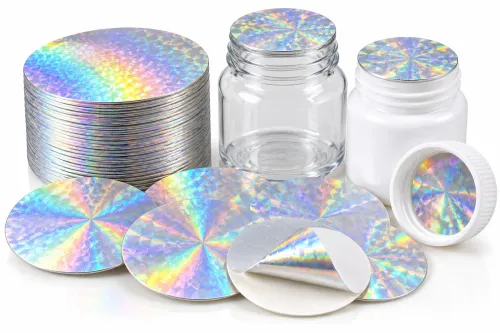
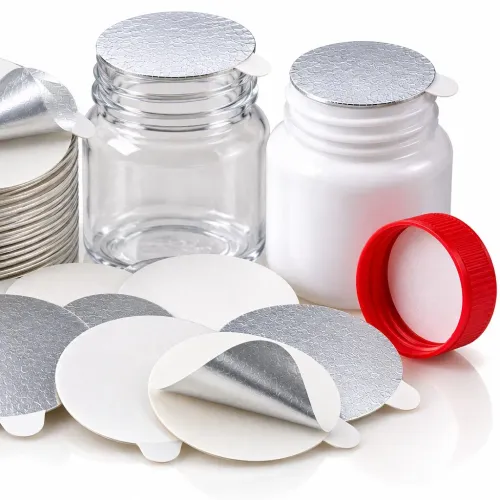
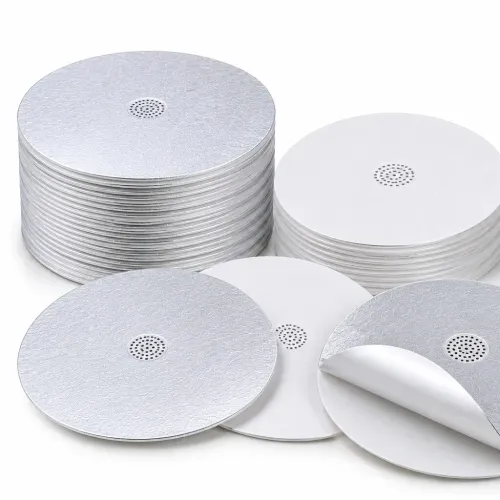
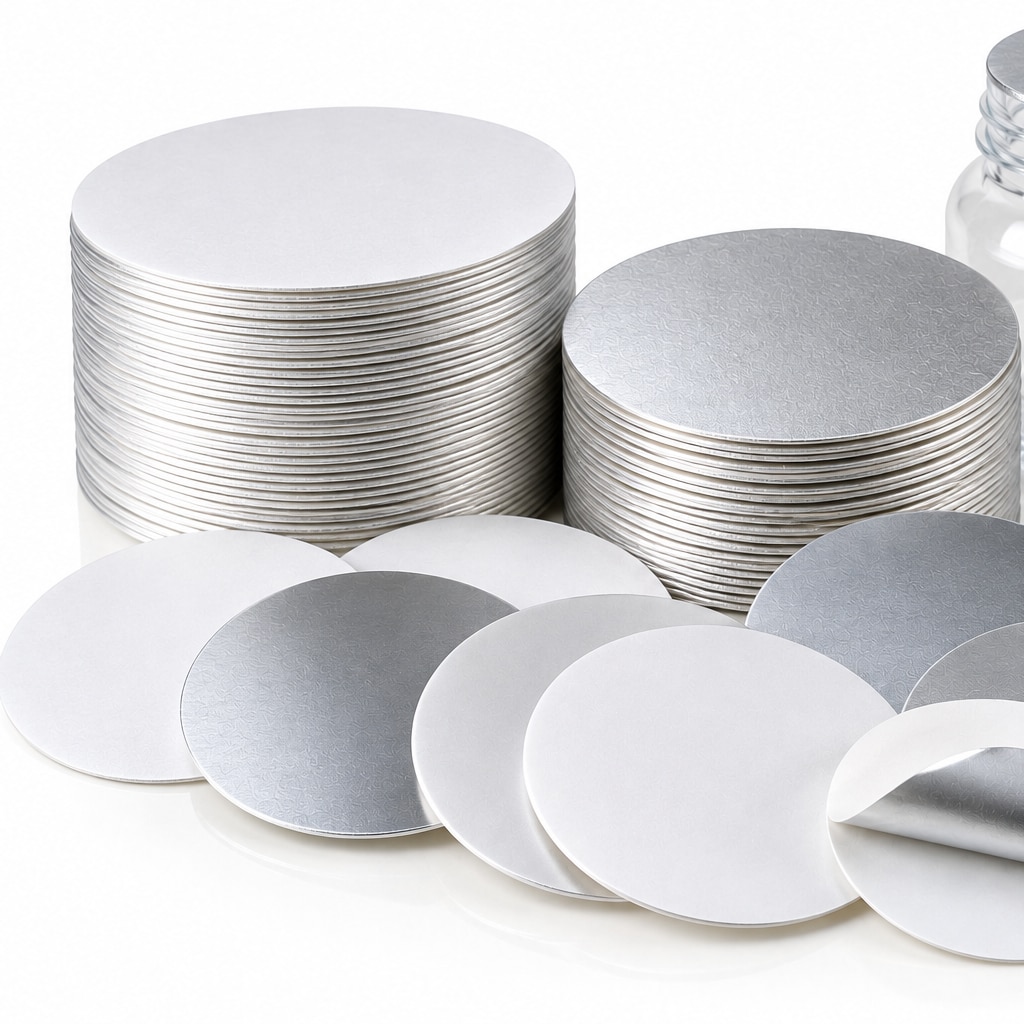
A PP container or closure does not bond to the induction field itself. In conventional PP induction wads, the aluminium foil susceptor absorbs electromagnetic energy and transfers heat through the laminate. The PP heat-seal layer on the wad then melts, wets the container’s sealing land, and fuses to that specific polypropylene surface.
The foil provides much of the barrier against oxygen and moisture; the sealant layer provides attachment.
Reliable polypropylene induction sealing depends on three matched conditions:
- A PP-compatible sealant formulation that bonds to the actual neck material. A liner made for polyethylene can produce a weak, intermittent, or non-peelable seal on PP.
- Even contact across the complete land. Poor centering, an uneven neck, or insufficient compression leaves an unsealed arc or channel.
- Controlled heat transfer. Excessive energy can burn the sealant, crack the foil, shrink the liner, or deform the neck; insufficient energy leaves an incomplete bond that leaks after cooling or transport.
PP induction wads therefore work because the liner construction, not the bottle label alone, determines the bond.
Match the liner to the complete neck-finish system
Confirm the finished neck and cap as a pair before choosing a PP-compatible wad. The bottle resin alone does not establish PP container and closure compatibility: the wad must contact a clean, flat PP sealing surface and compress evenly across the neck land.
| Component | Confirm from the drawing or specification | Why it matters |
|---|---|---|
| Container neck | Neck outside diameter, land width, lip flatness, thread geometry, neck height, and sealing-surface material | A narrow or uneven land leaves an unsealed annulus; a damaged lip creates channels |
| Closure | Closure specification, cap inside diameter, thread form, wall thickness, resin grade, filler, recycled content, colourant, and cap application height | The cap controls centring, pressure, heat absorption, and compression |
| Wad | Liner diameter, PP heat-seal contact layer, foil and backing construction, thickness, and liner retention | An oversized liner can buckle at the cap skirt; an undersized liner cannot cover the land |
| Assembly | Cap torque, seating position, and whether the liner stays in the cap or separates after opening | Poor seating produces uneven pressure; an unspecified construction creates the wrong opening and reclosure behaviour |
Check the liner diameter against the actual land and cap cavity, not only the nominal neck size. Ask for a drawing or datasheet showing tolerances, then test the production neck finish and closure lot; filled, recycled, or copolymer PP can change shrinkage and pressure distribution.
A PE sealing layer is not a substitute for a PP-formulated contact layer: it can produce a weak, intermittent, or non-peelable seal.
Choose the right PP construction and assemble the wad correctly
The contact layer must match the closure-facing PP surface; “PP liner” alone is not a sufficient specification. Among the PP grades for induction sealing, copolymer PP can offer a forgiving sealing surface, while filled polypropylene changes heat absorption and pressure distribution. Recycled PP adds lot-to-lot variation, colourants, and possible contamination that can interrupt bonding.
| Option | Sealing effect | Check before approval |
|---|---|---|
| Virgin copolymer PP | Consistent softening and contact | Confirm the grade and neck-finish resin |
| Filled polypropylene | Filler can alter heat flow, stiffness, and land flatness | Identify talc, calcium carbonate, glass, and filler percentage |
| Recycled PP | Variable melt behaviour and surface cleanliness | Test the actual recycled-PP closure lot |
| Peelable PP sealant | Gives controlled opening instead of a permanent bond | Confirm peel force, residue, and compatibility with the product |
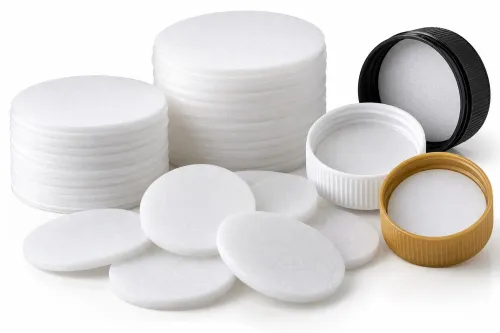
Select a liner construction for the opening and reclosure behaviour you need. A two-piece wad can leave a backing component in the cap after the foil-seal portion separates; a one-piece construction behaves differently and must be specified by name. The aluminium foil is the susceptor, while the peelable PP sealant bonds to the neck.
During assembly, seat the wad flat, keep it centred, and use the specified cap torque and closure height. A cocked liner or excessive cap-to-liner gap reduces pressure; too much compression can distort the wad and restrict heat transfer. Approve sealing with the actual closure resin, additives, dimensions, and finished neck—not a nominal PP description.
Build a validated induction-sealing window for PP packs
A setting that seals one PP bottle can overheat another, even when both are labelled polypropylene. Build the induction sealing setup for PP around the finished bottle, closure, liner, and production speed—not the resin name alone.
Record the validated range for:
- Generator power and line speed and dwell time. Increase energy only when the liner does not bond continuously; excessive exposure burns sealant, cracks foil, or distorts the neck.
- Coil-to-cap distance. Fix the applicator height and keep the cap centred under the coil; an uneven gap creates weak sectors on one side and overheating on the other.
- Cap application torque and axial compression. Insufficient pressure leaves channels, while excessive torque can distort the closure or squeeze sealant away from the land.
- Closure thermal mass and construction. Filled, recycled, coloured, thicker-wall, or post-moulding-shrunk PP caps absorb and distribute heat differently.
- Product heat sensitivity and cooling time. Check the product temperature after sealing, then test leaks after the pack has cooled and after transport simulation.
| Variable | Lower or uneven condition | Excessive condition |
|---|---|---|
| Generator power | Incomplete bond or unsealed sectors | Burnt coating, foil cracking, product heating |
| Line speed and dwell time | Insufficient softening | Overheating and neck deformation |
| Coil-to-cap distance | Weak, nonuniform seal | Localised hot spots |
| Cap centering and torque | Gaps or wrinkled liner | Distorted closure or displaced sealant |
Approve the window using the actual closure lot, neck finish, liner, torque, and machine. Do not transfer settings from a different PP pack without repeating the trial.
Inspect the seal and qualify the supplier decision
A shiny, unbroken foil does not prove a hermetic seal. PP seal inspection must confirm a continuous bond around the full land, with no wrinkles, burnt coating, foil cracks, skips, channels, neck distortion, or residue interrupting contact.
Qualify the pack with these checks:
- Use peel testing to measure seal strength and inspect whether the seal peels continuously or separates in spots. ASTM F88/F88M provides a recognised method for seal-strength testing.
- Run vacuum-decay leak testing on cooled, filled packs; a rigid, nonporous container should hold the specified vacuum without a detectable leak.
- Repeat both tests at minimum and maximum line speed, cap torque, container temperature, and induction settings.
- Include the first and last samples from each trial, plus closures, containers, and liners from different material lots.
- Recheck packs after cooling, vibration, compression, and the planned transport interval; a seal that passes immediately can open later.
Set acceptance limits before testing. A failed peel pattern, a leak, or an incomplete circumference is a process failure even when the cap feels tight. Ask the induction sealing supplier for test records using your actual neck finish, closure design, and liner lot—not a nominal PP resin description.
Surya Products Limited can be included in that comparison when its samples are tested against the same controls and limits. Approve production only after the process remains inside those limits across the full operating window.
Related products
 | INDUCTION SEALING WADS Paperboard, polyethylene and wax made two piece induction wads are reliable options for effective sealing of bottles and containers. View product → |
 | Single Piece Induction Wads Keeping track with the latest market developments, we are engaged in offering an extensive range of Induction Sealing Wads. View product → |
Frequently asked questions
Why can polypropylene containers form reliable induction seals?
Polypropylene can soften and fuse around 160–166°C, while resisting moisture and many chemicals. Excessive energy can still warp thin necks, distort threads, or damage caps.
How do you match a PP induction wad to a closure system?
Check the container resin, neck-finish dimensions, cap material, liner diameter, and closure fit as one system. A wad that suits PP alone may fail when the cap or finish changes.
How should you assemble a PP induction wad?
Select the correct PP construction for the pack, place the wad flat and centred in the closure, and confirm it remains seated during capping.
How do you validate induction sealing for polypropylene packs?
Test induction power, dwell time, line speed, container-neck temperature, and cap pressure together. Establish the lowest setting that produces a continuous bond without warping the pack.
What should you inspect when qualifying a PP induction-wad supplier?
Inspect seal continuity, leaks, wrinkles, delamination, liner placement, neck distortion, and cap-thread damage. Request consistent wad dimensions, material details, and batch traceability.
Related product
 | Sealing Wads Two peice tye Induction wads View product → |