A glass container does not determine the right sealing wad by itself: the cap, neck finish, product chemistry, filling process and opening experience all affect the choice. By the end, you will be able to specify the liner dimensions and construction, reject incompatible materials, and define the tests needed before approving a glass-container seal.
Key takeaways
- Match wad construction to product pressure, barrier needs and opening experience.
- Measure the glass finish, cap cavity and sealing land before ordering.
- Check sealant compatibility with the product, closure and regulatory requirements.
- Run trials on the actual line using filled, capped glass containers.
Match the Wad Construction to the Product and Opening Experience
Choose the construction by deciding what the customer must see, remove and experience at opening. Match it to the product’s pressure behaviour, the required barrier and the cap’s internal contact surface—not to the glass bottle alone.
| Construction | Opening result | Best fit |
|---|---|---|
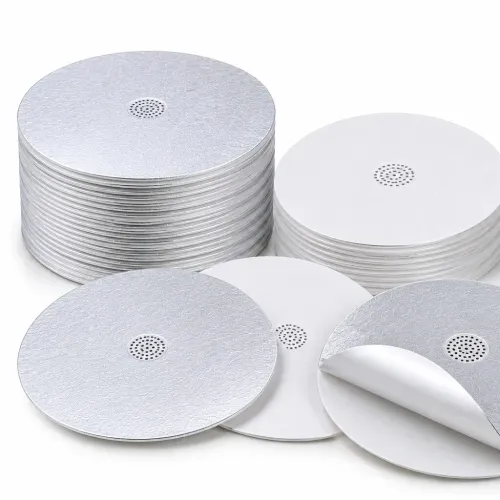
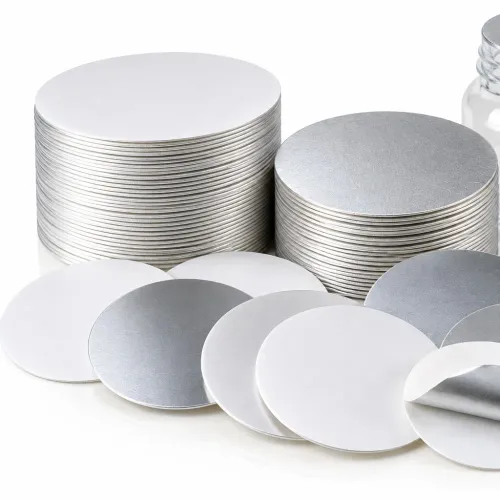
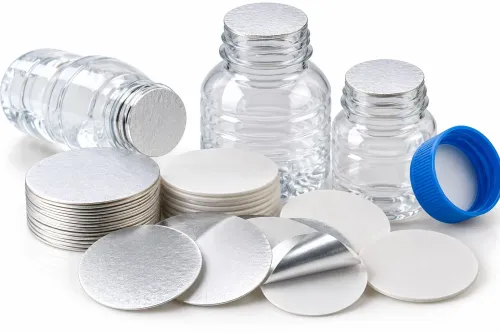
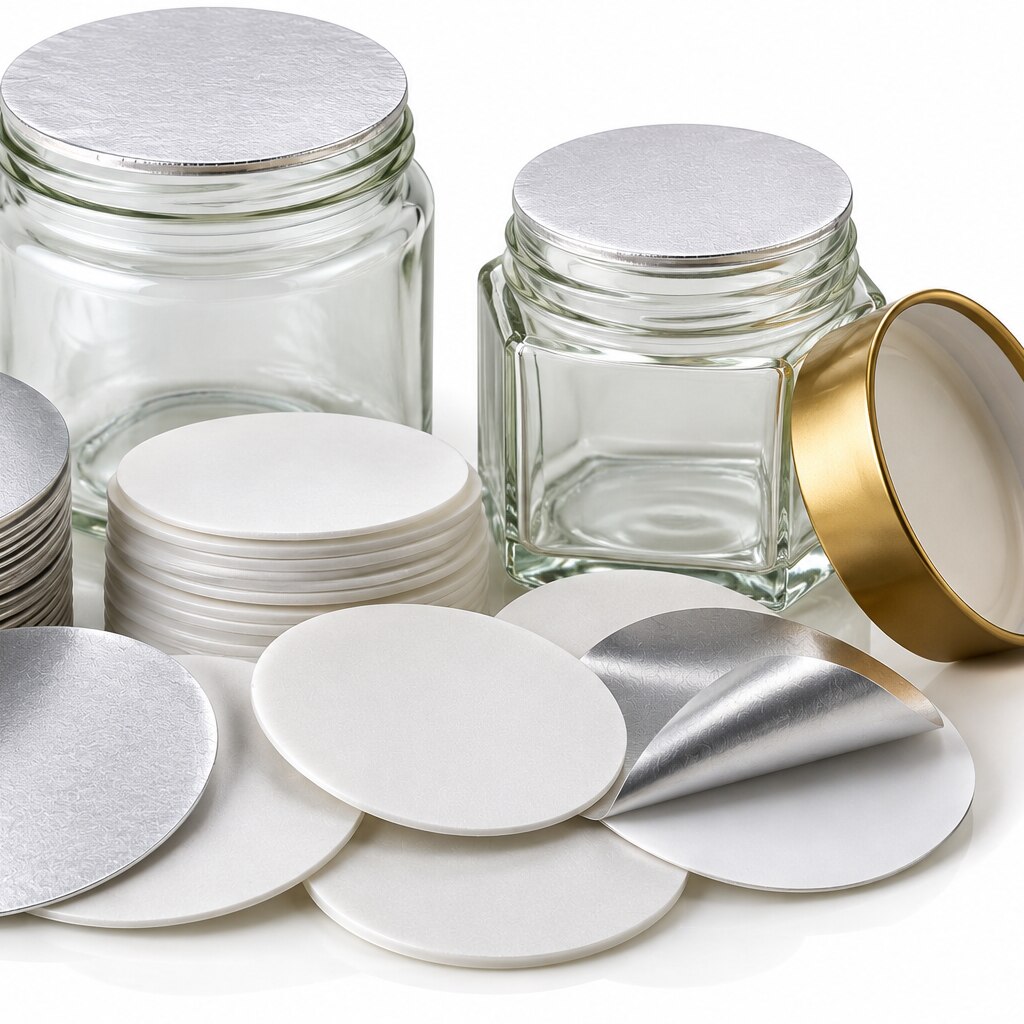
| two-piece wad | Foil and sealant stay on the glass; backing remains in the cap | Tamper evidence where a visible bonded seal is acceptable |
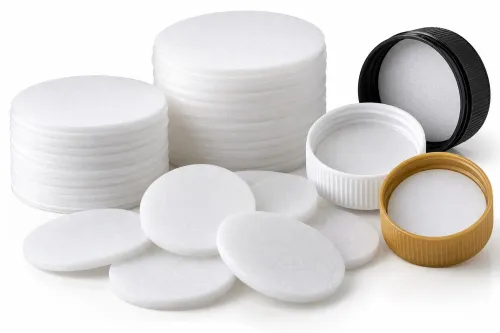
| single-piece wad | The complete liner stays with the closure | Customers who expect the entire wad to come out with the cap |
| pull-tab wad | A tab gives the user a deliberate, low-force opening point | Jars or bottles where clean, convenient opening matters |
| vented wad for glass containers | Permits controlled gas movement rather than a fully closed barrier | Products that generate pressure or need pressure equalisation, after barrier performance is validated |
Confirm that the heat-seal coating bonds to the specific cap surface: polypropylene, HDPE and coated closures do not behave identically. A two-piece wad can frustrate users who expect a clean cap, while a vented wad can admit moisture or oxygen if the product needs a high barrier.
Qualify the chosen construction through every real transition: hot filling, cooling, refrigeration, pasteurization or retorting. The glass may survive the process while the liner, sealant or cap fails. For pharmaceutical primary packaging, assess extractables, compatibility, microbial protection and seal integrity as part of the container-closure system; ISO 15378 addresses quality management for medicinal-product packaging materials.
Measure the Finish, Cap and Sealing Land Before Ordering
The correct wad diameter must cover the entire sealing land without touching the cap skirt or buckling inside the closure. Do not equate a 63 mm nominal cap size with a 63 mm wad; nominal cap diameter identifies the closure family, not the liner’s required outside diameter.
1. Record the bottle’s neck finish, including its outside diameter, bore, thread design, finish height and sealing-land dimensions. Use calibrated calipers to measure the flat annular land’s inner and outer diameters at several points. An out-of-round finish needs correction before wad selection.
2. Measure the cap’s internal panel diameter and depth, then note the cap material and any internal coating. The wad must sit flat on the panel and remain centred after application.
A wad that is too large can buckle against the skirt or finish; one that is too small can leave part of the glass unsealed.
3. Compare the measured sealing land with the supplier’s wad drawing, including outside diameter, inside diameter, thickness and compression profile. Ask for a dimensional sample rather than ordering from the cap diameter alone. Increasing thickness will not fix missing contact or poor dimensional fit.
4. Assemble sample closures on actual bottles and check for full land coverage, cap seating and thread engagement. Confirm application torque and inspect for cross-threading, because induction equipment cannot repair a tilted cap or incomplete contact.
Use the exact glass finish, cap and wad combination for trials. Changes in cap resin, liner coating, fill temperature or sealing-line geometry can change compression and final fit.
Check Product, Sealant and Regulatory Compatibility
A wad is compatible only when its sealant bonds to the actual glass finish. Confirm the supplier has tested the aluminium foil sealant coating against your glass, including any surface treatment, varnish or coating; the bond forms at the glass-to-sealant interface, not at the foil.
Treat paperboard, polyethylene and wax as separate material choices, each requiring product-specific compatibility evidence.
- Request the full material construction, sealant chemistry, adhesive information and food-contact or pharmaceutical compliance documents. Check that the intended product, closure and market appear in the supplier’s documentation.
- Test filled containers, not only empty glass. Oils, solvents, alcohols, surfactants and aggressive acids can soften sealants, cause migration or travel through tiny defects during storage.
- Age sealed packs at the intended shelf-life temperature and duration, then inspect for lifting, channels, odour, discolouration, leakage and changes in opening force. Include distribution temperatures, refrigeration and heat exposure.
- Run every production transition that applies: hot filling, cooling, pasteurization, retorting or refrigeration. Glass may survive the cycle while the cap, liner or sealant fails.
- For pharmaceutical primary packaging, qualify the wad within the complete container-closure system. Ask for evidence covering extractables, compatibility, microbial protection, seal integrity and storage conditions; ISO 15378 addresses quality management for medicinal-product packaging materials.
Do not accept a visual foil seal as proof of barrier performance. Pinholes, wrinkles, incomplete coverage, seal-land channels and leakage at the closure-to-finish interface can defeat even aluminium foil, so test oxygen or moisture protection where the product needs it.
Choose Between Induction, Pressure-Sensitive and Other Glass Seals
Choose induction sealing when you need a hermetic, tamper-evident barrier against leaks, oxygen, moisture or contamination, and you can control cap application and induction energy. It is preferable for liquids, volatile products, powders and products shipped through pressure or temperature changes.
| Option | What it provides | When it applies |
|---|---|---|
| Induction sealing | Heat-bonded seal between the liner and glass; two-piece versions leave foil and sealant on the container after opening | Choose for leak resistance, tamper evidence and extended barrier protection |
| Pressure-sensitive liner | Adhesive bond activated by cap pressure during application | Choose for simple, low-speed packaging where a hermetic seal is unnecessary |
| Foam liner | Compression seal that follows minor surface irregularities | Choose for dry products and basic closure cushioning, not demanding leak protection |
| Waxed liner | Wax bond between paper or board and the container finish | Choose for low-cost, traditional packs where barrier performance and clean removal are limited |
| Foil seal | Foil barrier held or bonded beneath the closure | Choose for light, moisture and aroma protection only when its attachment method meets the package requirement |
Induction sealing cannot rescue poor closure application. Cross-threading, low torque, damaged threads, an out-of-round finish or incomplete liner contact can leave channels in the seal.
Match the sealant to the glass surface, cap resin and any finish coating. Polypropylene and HDPE caps do not guarantee the same bond. Select a one-piece liner when the customer expects the complete wad to leave with the cap; select a two-piece liner when visible opening evidence matters.
Vented or pull-tab constructions suit packs needing controlled pressure release or easier removal. Validate the choice on the actual induction head, line speed and cap-to-coil distance.
Validate the Seal on the Actual Production Line
Run qualification samples on the production line, not only on a bench. Use the actual glass finish, cap resin and coating, wad lot, product, fill temperature, induction settings, line speed and application torque. Include hot filling, cooling, refrigeration, pasteurization or retorting when those conditions occur.
Request these records from the supplier:
- A certificate of analysis identifying wad construction, sealant, lot number and release criteria.
- The stated temperature and process-use range, with test conditions that cover your fill and distribution transitions.
- Compatibility results for the actual product, including aged filled containers for oils, alcohols, solvents, surfactants or acids.
- Recommended sealing settings, sampling plan and acceptance limits for seal integrity testing.
- Traceability from supplied lot to raw materials and retained production samples. Surya Products Limited can provide a useful comparison point when you ask a wad supplier to document these operating details rather than simply confirm nominal size.
| Check | What it proves | Limitation |
|---|---|---|
| Visual inspection and opening or peel assessment | Complete circumference, clean removal and acceptable opening force | Cannot prove a leak-free seal |
| ASTM F2096 bubble-emission test | Detects gross leaks in a pressurised package | Does not establish shelf-life performance or reliably find microleaks |
| Vacuum decay | Non-destructive detection of small leaks at line speed | Requires validated equipment, fixtures and limits |
| Filled-product aging followed by leak testing | Sealant and barrier survive intended storage conditions | Must represent actual time, temperature and distribution |
| Application torque and pressure testing | Closure application is repeatable and resists handling loads | A strong result can still hide a small leak |
Related products
 | Vented Wads Designed as per health safety standard, these vented wads are used as reliable sealing options for HDPE and PET bottles containing chemicals. View product → |
 | Glass Jar Seals This is Two peice type Sealing wads for all type of Glass Bottles , Jars & container for Coffee Jars , Pickles , Jams , Ghee etc View product → |
Frequently asked questions
How do I match glass wad construction to my product?
Start with the product’s pressure behaviour, required barrier and the opening experience. Choose a construction that provides the needed resistance while allowing the customer to see, peel or remove the seal as intended.
What measurements do I need before ordering glass sealing wads?
Measure the glass finish, the cap’s internal cavity and the continuous sealing land where the wad contacts the container. Confirm the wad diameter and thickness against these measurements, not the bottle’s outside appearance.
What compatibility checks are needed for glass sealing wads?
Check the product against the wad’s sealant and barrier layers, including chemical interaction, temperature exposure and storage conditions. Confirm that the materials and packaging configuration meet the requirements for your product and market.
Should I choose induction sealing or pressure-sensitive seals for glass containers?
Choose induction when you need a hermetic, tamper-evident seal produced after capping. Choose pressure-sensitive sealing when application simplicity and an easy peel experience matter more than induction equipment and process control.
How do I validate a glass seal before full production?
Run trials with the actual glass containers, caps, wads, product fill, line speed and induction settings. Inspect seal coverage and removal, then test for leaks, contamination resistance and performance after planned storage and transport conditions.
Related products
 | INDUCTION SEALING WADS Paperboard, polyethylene and wax made two piece induction wads are reliable options for effective sealing of bottles and containers. View product → |
 | Single Piece Induction Wads Keeping track with the latest market developments, we are engaged in offering an extensive range of Induction Sealing Wads. View product → |
 | 5/7 Layer Golden Wads We are offering premium quality 7 Layer Golden Wads that can be used in wide range of industries such as food, beverage, cosmetics, pharmaceutical... View product → |
 | Holographic Induction Sealing Wads This is Two peice type induction sealing wads with HOLOGRAM or Holographic printing. View product → |